
USP general chapters in 2026: what is still open for comment
The comment window on Pharmacopeial Forum 52(4) closes on 30 September. Here is what USP has out for consultation this year that matters to analytical and process-analytics teams.
Tag
34 articles tagged chemometrics.
The comment window on Pharmacopeial Forum 52(4) closes on 30 September. Here is what USP has out for consultation this year that matters to analytical and process-analytics teams.

A chemometric model changes more often than the instrument it runs on. Change control is the quality-system machinery that decides which of those updates needs an assessment, an approval, and a filing.

Papers published over the past year test whether plants can train a shared spectroscopic model without pooling spectra. The method works on paper; the instrument physics is the harder part.

Terahertz spectroscopy reached tablet compression lines, battery electrode inspectors, and airborne gas monitors in 2025-2026 - a survey of the papers that moved the technique toward routine industrial use.

Quality risk management under ICH Q9(R1) reshapes how pharmaceutical manufacturers classify, validate, and maintain chemometric models embedded in process analytical technology.

Each update to an approved chemometric procedure in the EU is a regulatory event. Commission Regulation No 1234/2008 and ICH Q14 determine which variation type applies and whether prior approval is needed.

What to measure inline when crystallisation runs continuously, which PAT tools fit which regime, and how endpoint stops being a moment and becomes a window.

A survey of 2026 papers on deep learning for Raman peak resolution: self-supervised transformers, learned baselines, simulation-driven denoising, and benchmarks that keep 1D CNNs in the game.

A production chemometric model is a living asset. Detection catches drift before it silently biases release decisions; the response ladder tells the plant what to do next.

RMSEC, RMSECV, and RMSEP are all reported in units of the property being predicted. They mean three different things, and confusing them is how process labs quietly overpromise model accuracy.

Recent peer-reviewed work on transfer learning in Raman and NIR classifier training reports real gains on small labelled sets, but the cross-instrument and cross-matrix picture is still uneven.

Recent papers push Bayesian uncertainty into the same workflows that PLS has owned for two decades. Where the ideas stick, and where they still stumble in production.

A multi-site rollout is not one deployment repeated N times. Five upstream decisions - governance, transfer, validation, change control, data flow - determine whether site N behaves like site one.

A composite of practitioner conversations on FDA and EU inspections that put process analytical technology and chemometric models in scope. Inspectors read the lifecycle records, not the qualification protocols.

A side-by-side ranking of the open-source software stack practitioners actually use for Raman, IR, and NIR processing in 2026 - what each does best, where it stops short, and which combinations work in production.

Synthesised observations from PAT-adjacent engagements where data scientists from web-product backgrounds collide with chemometricians steeped in PLS, ASTM E1655, and calibration transfer.

Recap of process analytical talks, awards and sessions from PITTCON 2026 in San Antonio and the analytica conference 2026 in Munich, with verified program details from both organizers.
The open-source stack that academic spectroscopy groups now teach with - mdatools, Quasar, pyMCR, rampy, pybaselines - has matured into something an industry hire arrives knowing. A field snapshot.

FDA, EMA, and PMDA all build on ICH Q2(R2) and Q14, but their expectations for routine chemometric model upkeep, post-approval changes, and reference-method failures diverge in ways that shape submission strategy.

Four mid-May physics.chem-ph preprints worth a PAT reader's time: vibrational eigenstate computation, polaritonic spectroscopy reliability, ML for photochemical decay, and DFT-accuracy ML force fields.

A partial least squares model rarely survives the move to a second instrument unchanged. A working protocol covers transfer set design, the standardisation method, and the acceptance criteria.

Univariate SPC watches one number. A spectroscopic analyser produces a thousand. Multivariate SPC condenses them into two statistics that have been the standard since the early 1990s.

Six recent peer-reviewed PAT papers worth a read: lean chemometrics for spectroscopic models, simpler bioprocess Raman regressions, at-line terahertz for crystallinity, and PAT-with-machine-learning past the bioreactor.

A calibration set defines what a chemometric model can predict, and where it will fail. Five planning decisions made up front determine whether validation later passes or unravels.

Three recent papers shift the calibration-transfer conversation: a low-rank fine-tuning method for deep Raman models, a vendor-to-vendor PDS/SST study, and single-compound shortcuts that sidestep paired transfer sets.

March-May 2026 in ACS Analytical Chemistry: three threads for process analytics - close-focus Raman probes for turbid streams, deep-learning chemometrics, and open-source spectroscopy tooling.
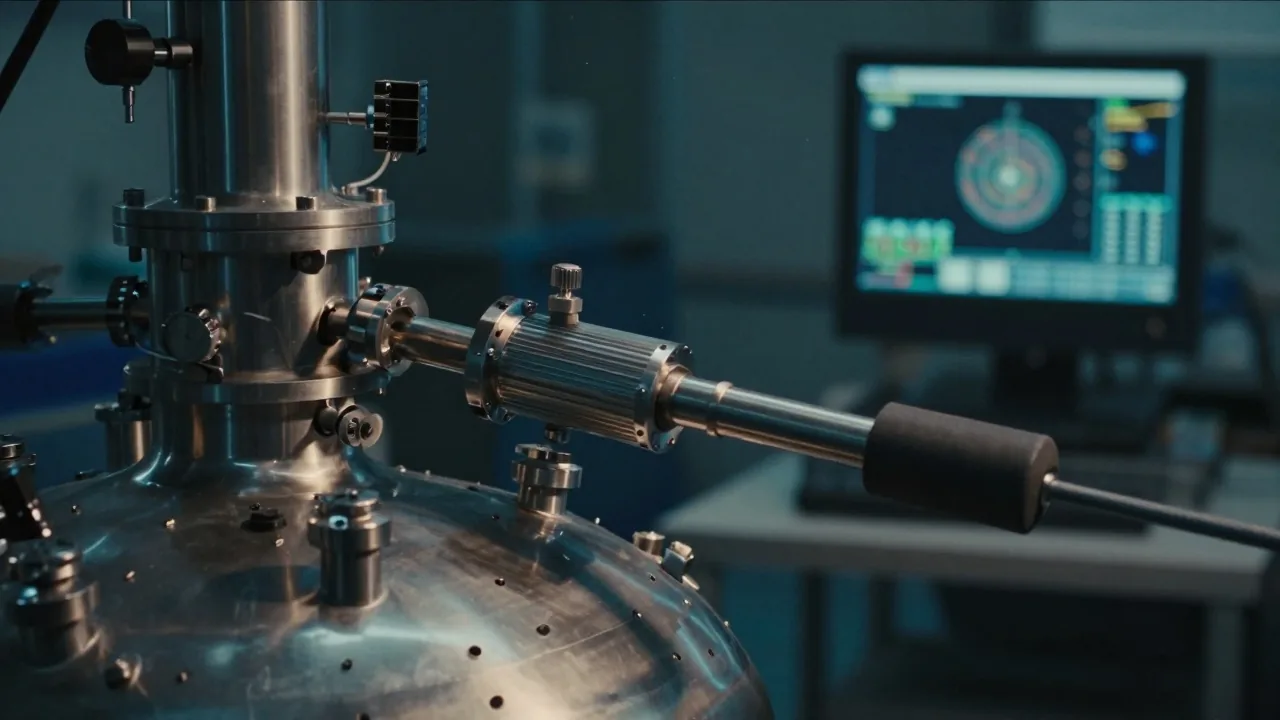
A primer on PAT - the FDA-driven framework for measuring chemistry where it happens, why pharmaceutical and chemical manufacturers adopt it, and the tools that make it practical.

Six recent reviews map where hyperspectral imaging now sits as a process-analytics tool in pharma, food, recycling, and beyond - and where chemometrics, data hunger, and standards still hold it back.

Five recent papers sketch where deep-learning chemometrics sits versus PLS for process Raman: a public bioprocess benchmark, two classifier benchmarks, self-supervised pre-training, and an explainability tool for GMP.

scikit-learn, pyChemometrics, ChemometricsLib, and the rest. A practitioner's review of what works for inline spectroscopy, what doesn't, and where the gaps still are.
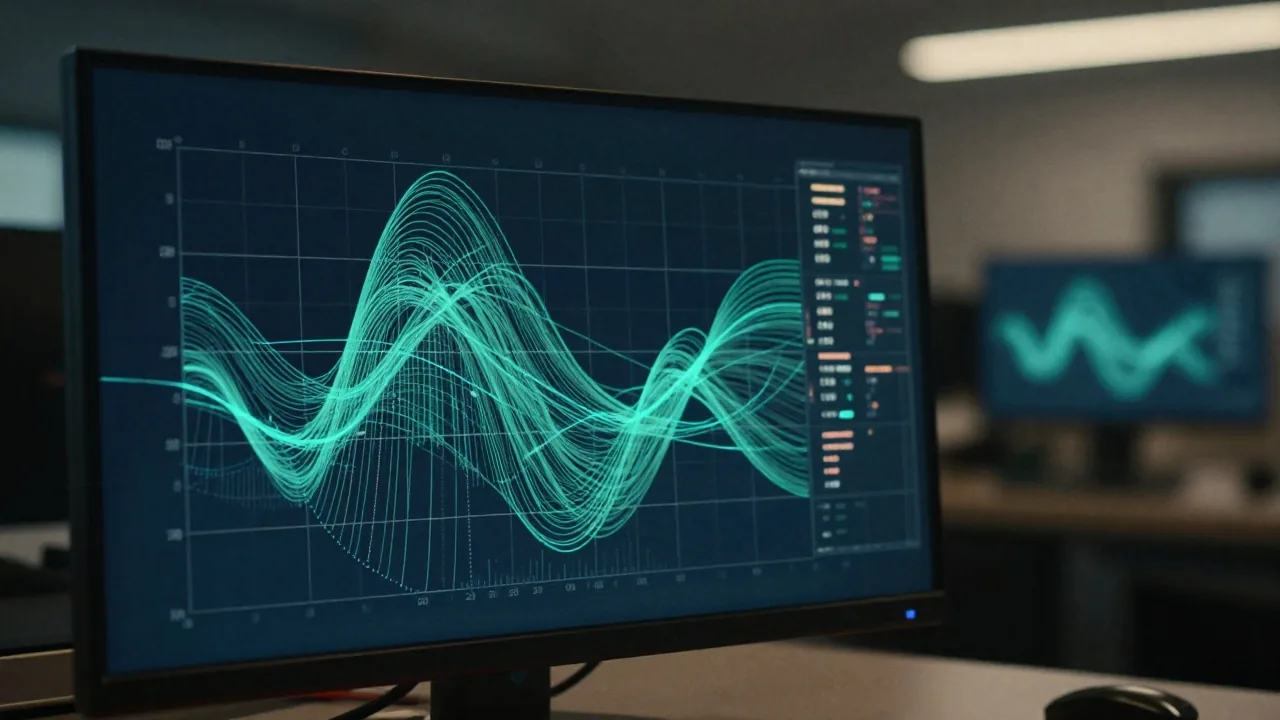
Spectra are not answers. The bridge between a 1,000-channel spectrum and a number you can act on is chemometrics - a small toolbox of multivariate methods, used the same way for forty years.

Both methods take a 1,000-channel spectrum and compress it into a handful of latent variables. They are not interchangeable. PCA describes; PLS predicts. The decision is older than most of the software.
ICH Q14 sets the framework. ASTM E1655 sets the practice. The intersection - what an inspector actually wants to see in a chemometric validation file - is a short, specific list.
A composite of observations from PAT projects where the model team and the line team had everything they needed except a shared vocabulary. What both sides actually mean by the words they use.